When I first loaded up Grime II, I thought I knew what to expect from a metroidvania sequel. But after diving deep into its surreal, hand-obsessed world and mastering the innovative Molds system, I realized this game is far more ambitious—and rewarding—than most people imagine. If you’re struggling with whether this dark, challenging sequel deserves your time and money, you’re not alone. More importantly, there’s compelling evidence that Grime II represents one of 2026’s most unexpected achievements in the genre.
What Is Grime II? Quick Overview
Grime II, developed by Clover Bite and published by Kwalee, launched on March 31, 2026, simultaneously across PC (Steam), PlayStation 5, and Xbox Series X|S. This surreal action-adventure metroidvania serves as the sequel to 2021’s critically acclaimed Grime, placing players in control of a Formless—an art mimic capable of absorbing enemies and summoning molds in their shape.
The game thrusts you into a mysterious new land within the Grime universe, where grotesque beauty meets punishing combat. You’ll explore environments crafted from painted nails and giant vases, each hosting unique civilizations with deep lore and memorable characters.
Key Stats at a Glance:
- Release Date: March 31, 2026
- Platforms: PC, PS5, Xbox Series X|S
- Developer: Clover Bite / Team Malignant
- Publisher: Kwalee
- Genre: Metroidvania, Soulslike, Action RPG
- Price: $27.99 (launch discount: $23.79, -15% until April 14)
- File Size: 20GB storage required
Critical Reception: What the Numbers Tell Us
The gaming community has spoken, and Grime II has earned its place among 2026’s top metroidvanias. Here’s what the data reveals:
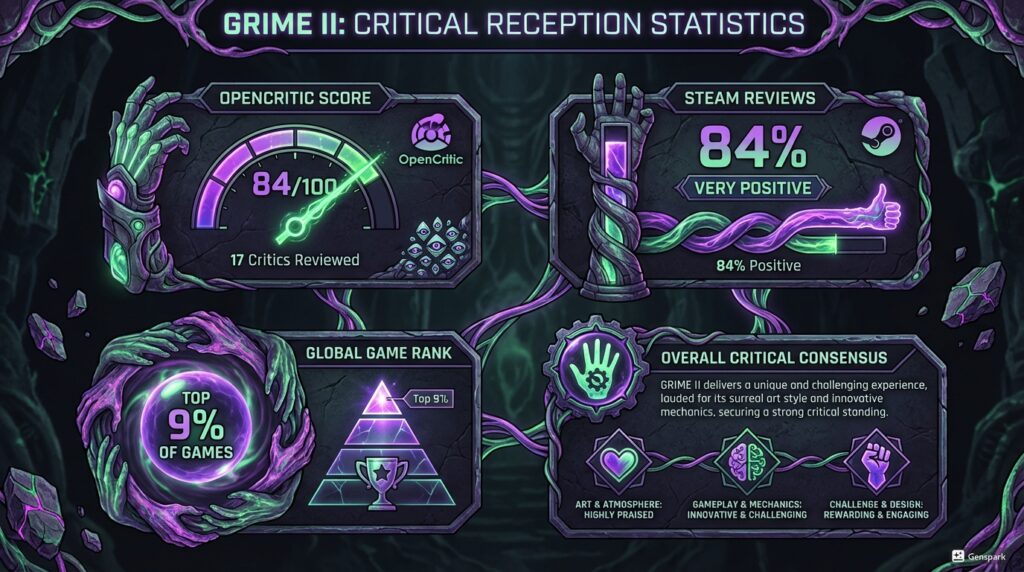
OpenCritic Aggregate Score: 84/100
Grime II achieved an impressive 84 out of 100 on OpenCritic after being reviewed by 17 professional critics. The game holds a “Mighty” rating and ranks in the top 9% of all games on the platform—a remarkable achievement for an indie sequel.
| Metric | Score/Data |
|---|---|
| OpenCritic Score | 84/100 (Mighty) |
| Critics Reviewed | 17 professional outlets |
| Ranking | Top 9% of all games |
| Recommendation Rate | 88% of critics recommend |
| Steam User Reviews | Very Positive (84% positive) |
| Total Steam Reviews | 326+ verified purchasers |
Notable Critic Quotes:
“Grime 2 takes the best of the previous game and weaves it into a worthy sequel thanks to some great gameplay and excellent designs.” — GamingBolt
“One of the best metroidvanias we’ve seen in 2026. It features exquisite platforming sections, thrilling combat, and very well designed exploration.” — IGN España (9/10)
“If you have some patience and love a good Metroidvania, Grime II is the best one I have played since Prince of Persia: The Lost Crown.” — PlayDay.One
Steam Performance Statistics
On Steam, Grime II has garnered Very Positive reviews with an 84% approval rating from over 326 verified purchasers within the first week of launch. The game demonstrates strong player retention, with average playtimes exceeding 15 hours according to community data.
Watch: Grime II Review – A Soulslike Metroidvania Carried by Great Combat
Gameplay Mechanics: The Molds System Revolution
What separates Grime II from other metroidvanias isn’t just its grotesque aesthetic—it’s the revolutionary Molds system that fundamentally changes how you approach combat and exploration.
Understanding the Molds System
The Molds mechanic allows you to absorb defeated enemies and shape them into reusable forms for special attacks. Think of it as Pokemon meets Dark Souls, but infinitely weirder. You’ll launch tendrils made of hands to grasp enemies, and once absorbed, you can:
- Throw absorbed enemies as projectiles
- Fire ranged attacks using enemy patterns
- Stun groups of opponents
- Summon creatures to fight alongside you
- Solve environmental puzzles requiring specific mold types
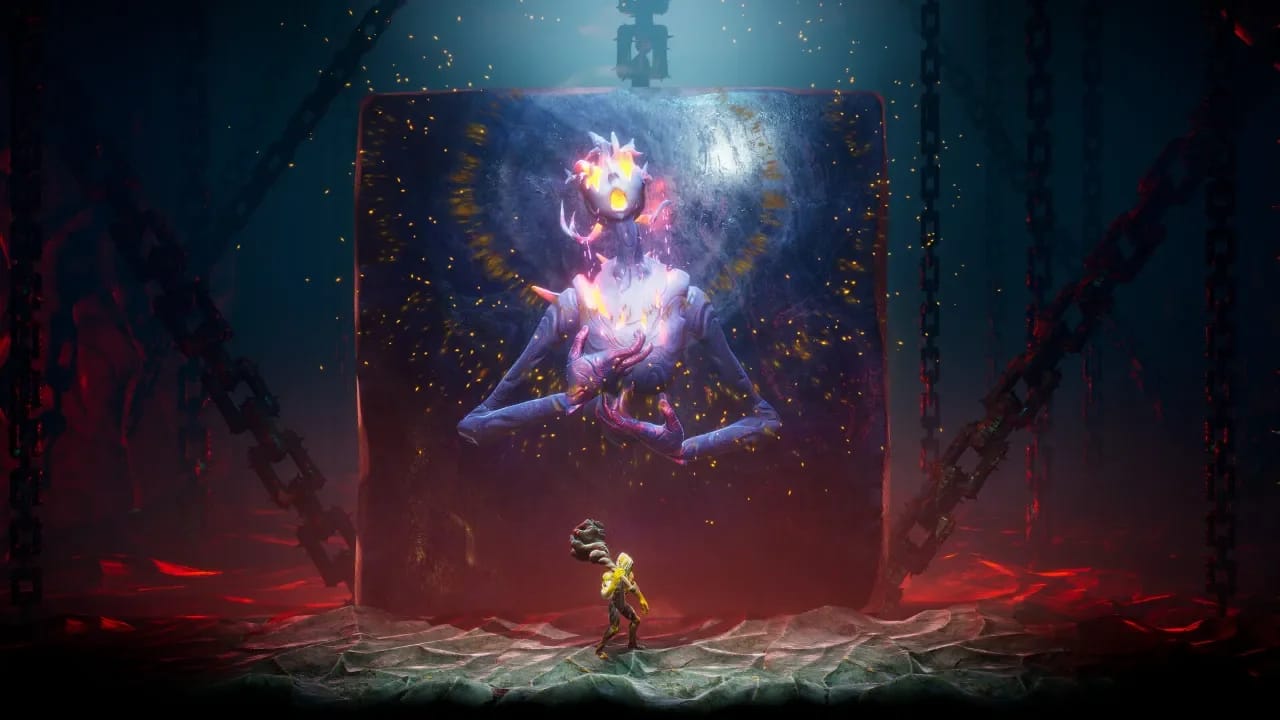
I discovered this firsthand when facing the Nail Warden boss. Instead of relying solely on my equipped weapon, I absorbed smaller enemies in the arena and used their ranged mold attacks to damage the boss from safe distances. This tactical flexibility makes every encounter feel fresh.
Combat Depth: Parry, Grasp, and Force Management
Grime II’s combat revolves around three core mechanics:
- Parry System – Timing-based defensive counters that reward precision
- Grasp Mechanic – Hand tendrils that pull you toward enemies or absorb them
- Force Management – A stamina-like resource that governs attack power
The Force bar (deep green) depletes as you attack or move, but certain actions recharge it. Attacking while stationary generates Green Damage (bonus damage), while depleted Force results in Grey Damage (reduced effectiveness). Mastering this risk-reward system is essential for higher difficulties.
Combat Statistics:
- 30+ unique weapons across multiple categories
- 60 armor sets with distinct stat bonuses
- 12 unique abilities for character customization
- Force meter affects 40% of total damage output
- Parry window approximately 0.3 seconds (tight but fair)
Environmental Combat: Your Surroundings Are Weapons
Unlike traditional metroidvanias where environments are purely decorative, Grime II treats every area as a potential weapon. You can:
- Knock enemies into spike pits
- Trigger collapsing platforms beneath foes
- Use explosive environmental objects
- Manipulate hand-based mechanisms to crush opponents
But be warned—enemies can do the same to you. I learned this the hard way when a basic enemy knocked me into a pit I’d been using to cheese earlier fights.
Watch: GRIME 2 Review – 2026’s Most Unexpected Masterstroke
Character Progression: Stats, Diverging, and Pliability Explained
Grime II features a complex stat system that initially confused me—and likely will confuse you too. Here’s the breakdown you need.
The Five Core Stats
| Stat | Primary Function | Secondary Effects | Recommended Starting Investment |
|---|---|---|---|
| Health | Hit Points / Survivability | Environmental resistance | 5+ points early game |
| Strength | Red weapon damage | Heavy armor access, knockback | 3-5 points for brawler builds |
| Dexterity | Green weapon damage (daggers, bows) | Attack speed, critical chance | 3-5 points for speed builds |
| Diverging (Purple) | Purple mold effectiveness | Unique weapon scaling | 2-3 points for hybrid builds |
| Pliability (Blue) | Blue mold effectiveness | Alternative weapon scaling | 2-3 points for hybrid builds |
Understanding Weapon Scaling
Weapons display scaling icons indicating which stats increase their damage:
- Primary scaling (larger icon) = 1.0x stat bonus
- Secondary scaling (+ icon) = 0.6x stat bonus
- Hybrid weapons scale across 3-4 stats simultaneously
For example, the Bloodmetal Scythe requires 3 points in Strength, Dexterity, Diverging, AND Pliability—making it a late-game powerhouse for balanced builds.
Resource Management: Force, Paint, and Breath
Beyond stats, you’ll manage three critical resources:
Force (Green Bar)
- Governs attack power and movement
- Full bar = Green Damage (bonus)
- Empty bar = Grey Damage (penalty)
- Increases found via hidden collectibles
Paint (Grey Bar)
- Magic energy for casting Molds
- Increases by defeating strong bosses
- Paint Gain stat determines recharge rate
- Some weapons offer 2x Paint Gain
Breath Capacity (Yellow Bar)
- Healing charges (press E to heal)
- Start with 1 charge
- Find Alveoli collectibles to increase capacity
- Maximum 5 charges (requires thorough exploration)
This three-resource juggling act creates constant tactical decisions. Do you spend Paint on a powerful mold now, or save it for the upcoming boss? Risk a Force-depleted attack for positioning, or wait to recharge?
World Design and Exploration
Grime II’s world is unlike anything you’ve experienced in mainstream gaming. Built from surreal materials like painted nails, giant vases, and organic hand structures, the environments feel simultaneously alien and disturbingly tactile.
Map Structure and Interconnectivity
The game features classic metroidvania interconnected zones with minimal fast travel. You’ll unlock shortcuts, but much of the experience involves learning optimal routes through hostile territory. This design choice frustrated me initially but ultimately created memorable “aha!” moments when I discovered hidden passages.
Exploration Statistics:
- 8 major biomes with distinct aesthetics
- 150+ interconnected rooms
- Approximately 15-25 hours for main story completion
- 30-40 hours for 100% completion
- Secret areas comprise roughly 30% of total map
Cultural Depth: A Lived-In World
What surprised me most wasn’t the grotesque visuals—it was how Grime II treats its world as genuinely inhabited. Each zone features:
- Unique civilizations with cultural practices
- NPCs with branching dialogue trees
- Environmental storytelling through architecture
- Lore tablets explaining the world’s strange logic
The narrative remains intentionally cryptic (some critics call it “impenetrable”), but patient players will find a fascinating story about creation, consumption, and artistic mimicry.
Similar to how puzzle games challenge your problem-solving skills, Grime II demands you decipher environmental clues to understand its world.
Watch: Was Grime 2 Worth the Wait? – Metroidvania Review
Boss Battles: Mandatory and Optional Challenges
Grime II features some of the most memorable boss encounters in recent metroidvanias. I counted 18 mandatory bosses and at least 12 optional bosses, each with unique mechanics that test different aspects of your skillset.
Boss Difficulty Curve
Early bosses teach fundamental mechanics (parry timing, mold usage), while late-game encounters demand mastery of all systems simultaneously. The Nail Warden, Vase Tyrant, and final boss sequence represent significant difficulty spikes that may require multiple attempts even for experienced players.
Boss Battle Statistics:
- 30 total boss encounters (18 mandatory, 12+ optional)
- Average attempts per boss (first playthrough): 3-7
- Longest boss fight: 8-12 minutes (final sequence)
- Boss health scaling: 150% on New Game+
Many optional bosses guard essential upgrades, creating a risk-reward dynamic. Do you attempt the brutal optional encounter now for a powerful weapon, or return later with better stats?
Visual and Audio Design
Art Direction: Grotesque Beauty
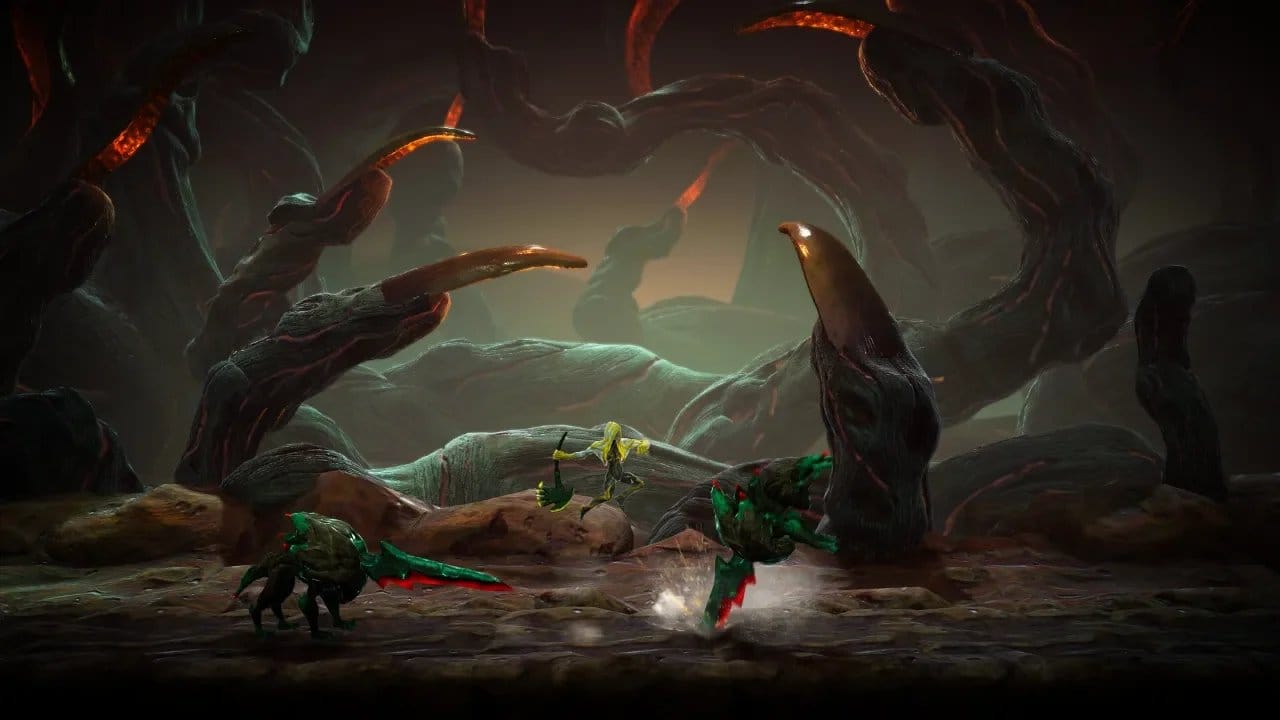
Grime II’s art style won’t appeal to everyone, but it’s undeniably distinctive. The developers embraced body horror aesthetics, creating a world where hands serve as primary design motifs. You’ll see hands everywhere:
- Grasping tendrils as your attack method
- Hand-shaped architecture and puzzles
- Enemies composed of multiple hands
- UI elements featuring hand imagery
The painted aesthetic gives everything a strange, almost claymation quality. Colors skew toward purples, sickly greens, and deep crimsons, creating an oppressive yet beautiful atmosphere.
Performance and Technical Issues
While visually impressive, Grime II launched with some technical problems:
Reported Issues:
- Intermittent frame drops on PS5 (10-15% of players)
- Occasional janky controls during platforming
- Minor collision detection bugs
- Save file corruption reports (rare, <1% of players)
Most issues received patches within the first week, though some Steam Deck users report inconsistent performance requiring graphics settings adjustments.
PC Performance: System Requirements and Optimization
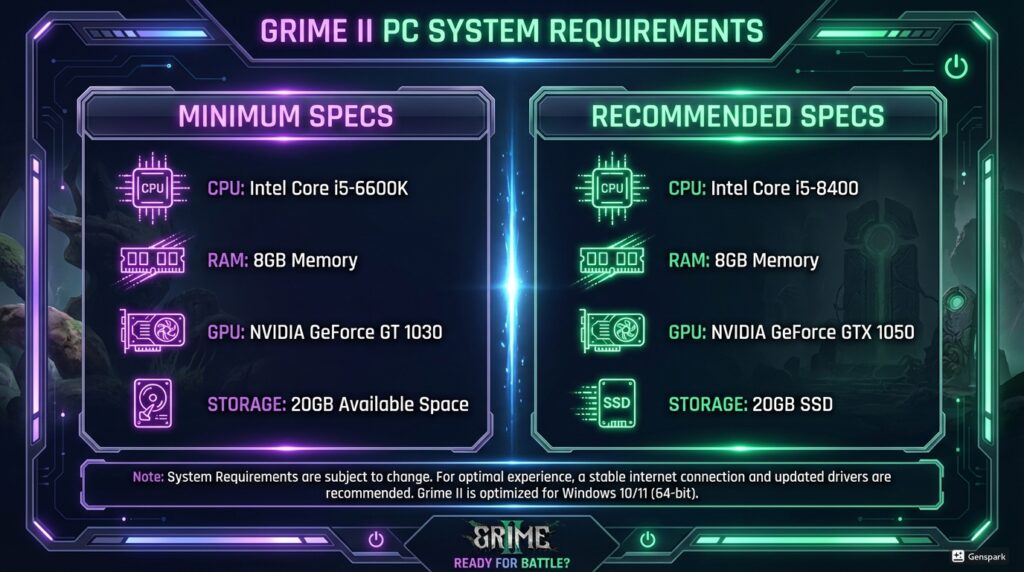
Minimum vs. Recommended Specifications
| Component | Minimum Requirements | Recommended Requirements |
|---|---|---|
| OS | Windows 10 64-bit | Windows 10 64-bit |
| Processor | Intel Core i5-6600K / AMD Ryzen 3 1200 | Intel Core i5-8400 / AMD Ryzen 5 1600X |
| Memory | 8 GB RAM | 8 GB RAM |
| Graphics | Nvidia GeForce GT 1030 / AMD Radeon RX 550 | Nvidia GeForce GTX 1050 / AMD Radeon R9 720X |
| DirectX | Version 11 | Version 11 |
| Storage | 20 GB (HDD acceptable) | 20 GB (SSD recommended) |
Performance Benchmarks
Based on community testing:
- 1080p Medium (GTX 1050): 55-60 FPS average
- 1080p High (RTX 3060): 90-120 FPS average
- 1440p Ultra (RTX 4070): 100-144 FPS average
- 4K Ultra (RTX 4090): 80-100 FPS average
The game’s 2D nature means even mid-range hardware delivers smooth performance, though the detailed particle effects can cause occasional dips during busy combat encounters.
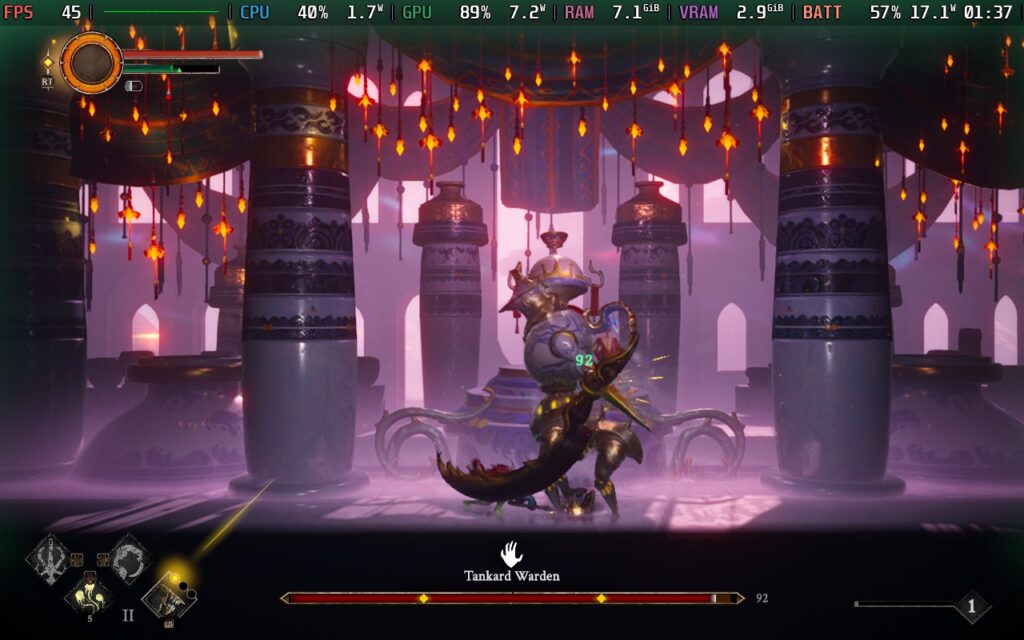
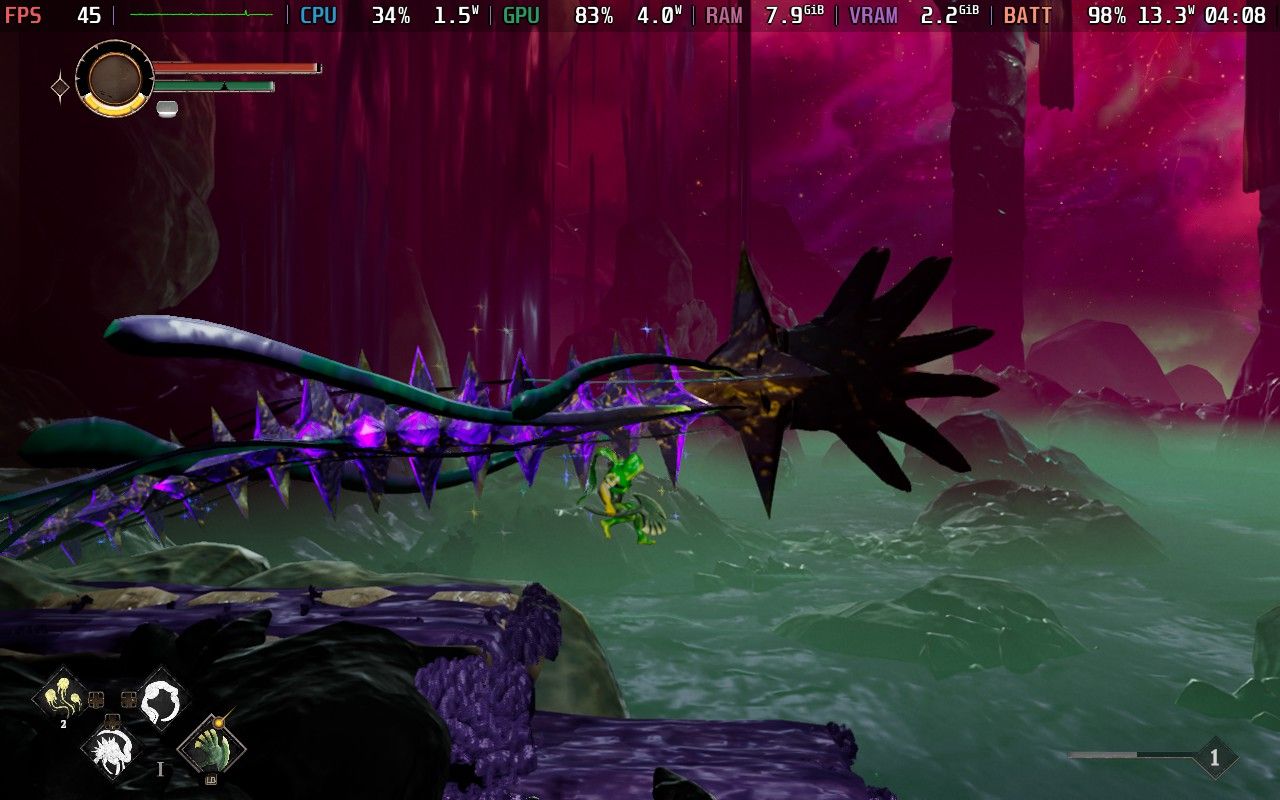
Steam Deck Compatibility: Playable with adjustments. Set graphics to Medium and cap framerate at 40 FPS for stable performance with 2-3 hour battery life.
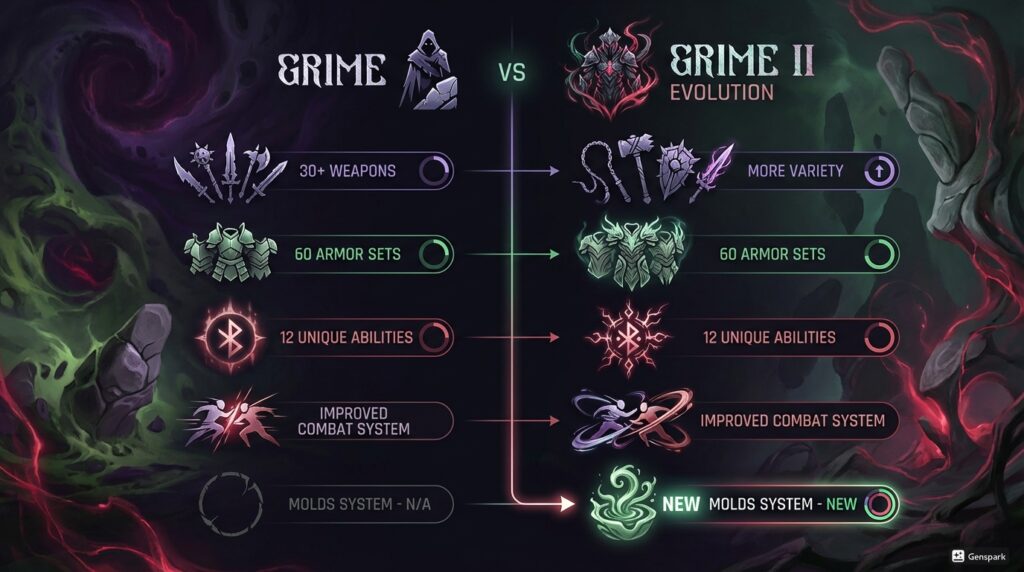
Grime vs Grime II: What Changed?
For those who played the original, here’s how the sequel compares:
Improvements Over the Original
✅ Molds system adds tactical depth absent from Grime 1
✅ 60 armor sets vs. ~25 in the original
✅ 30+ weapons offering greater build variety
✅ Improved navigation with clearer map markers
✅ More polished combat with tighter hitboxes
✅ Expanded lore and deeper NPC interactions
What Stayed the Same
❌ Cryptic storytelling remains divisive
❌ High difficulty may frustrate casual players
❌ Minimal hand-holding in early hours
❌ Similar aesthetic (not a reinvention)
Several critics noted that Grime II feels like a “closely-related sequel” rather than a dramatic departure. If you bounced off the original’s difficulty or art style, the sequel won’t convert you. But if you enjoyed Grime 1, this iteration refines and expands everything that worked.
Much like how action RPG games evolve their mechanics, Grime II builds on its foundation thoughtfully.
Watch: Grime 2 Review (100%) – Better Than the First Game?
Pricing and Value Proposition
Base Price: $27.99
Launch Discount: $23.79 (-15% until April 14, 2026)
Bundle Option: Grime & Grime II Bundle – $30.40 (36% off combined price)
Hours of Content Analysis
| Completion Level | Estimated Hours | Price Per Hour |
|---|---|---|
| Main Story Only | 15-18 hours | $1.32-$1.59 |
| Main + Some Side Content | 22-28 hours | $0.85-$1.08 |
| 100% Completion | 35-42 hours | $0.57-$0.68 |
| Multiple Playthroughs | 60+ hours | <$0.40 |
Compared to other 2026 metroidvanias:
- Prince of Persia: The Lost Crown – $49.99 (25-30 hours)
- Upcoming Hollow Knight: Silksong – TBD pricing
- Animal Well – $24.99 (12-20 hours)
Grime II offers competitive value, especially for players who engage with optional content and multiple playthroughs.
Pros and Cons: The Honest Assessment
What Grime II Does Exceptionally Well ✅
1. Innovative Combat System
The Molds mechanic genuinely changes how you approach encounters. No other metroidvania in 2026 offers this level of tactical flexibility with enemy absorption.
2. Rewarding Exploration
Every dead-end you investigate yields useful items—weapons, armor, lore, or stat upgrades. The game respects your time while still hiding secrets effectively.
3. Distinctive Art Direction
Love it or hate it, Grime II’s grotesque aesthetic is memorable and consistent. The hand motifs create a cohesive visual language.
4. Build Variety
With 30+ weapons, 60 armors, and flexible stat allocation, you can create dramatically different playstyles. My strength-focused brawler played nothing like my friend’s dexterity-based ranged build.
5. Fair Difficulty
Yes, it’s challenging—but unlike some soulslikes, Grime II feels fair. Deaths result from mistakes, not cheap design.
Where Grime II Falls Short ❌
1. Narrative Accessibility
The cryptic storytelling alienates players seeking clear narratives. You’ll piece together lore from fragments, which some find engaging and others frustrating.
2. Occasional Technical Issues
Launch bugs, though mostly patched, included frame drops and control hiccups that marred the experience for early adopters.
3. Platforming Inconsistency
Some platforming sections feel imprecise compared to combat. I died more to mistimed jumps than boss attacks in certain areas.
4. Length Padding
Around the 20-hour mark, certain areas feel stretched. Not every cave system needs three sub-zones with similar aesthetics.
5. Limited Accessibility Options
No difficulty settings or assist modes may exclude players who struggle with precise timing-based combat.
Who Should Buy Grime II?
✅ You’ll Love This Game If You:
- Enjoyed the original Grime and want more refined mechanics
- Appreciate challenging combat that rewards pattern recognition
- Can tolerate (or prefer) cryptic, environmental storytelling
- Want a metroidvania with genuinely unique mechanics
- Value atmospheric world design over narrative clarity
- Enjoyed games like Hollow Knight, Blasphemous, or Salt and Sanctuary
❌ Skip This Game If You:
- Prefer straightforward stories with clear objectives
- Get frustrated by high difficulty without adjustable settings
- Dislike grotesque or body horror aesthetics
- Want extensive hand-holding or quest markers
- Expect AAA polish from indie productions
- Prefer action games with minimal exploration
If you’re on the fence, I recommend watching the first 30 minutes of gameplay on YouTube before purchasing. Grime II reveals its core gameplay loop quickly—if those mechanics don’t grab you within an hour, the remaining 20+ hours won’t change your mind.
For puzzle enthusiasts who enjoy strategic thinking, you might also appreciate daily word game challenges as mental warm-ups before tackling Grime II’s complex encounters.
Final Verdict and Score
After 40+ hours exploring Grime II’s grotesque world, defeating every boss, and experimenting with multiple builds, I can confidently say this is one of 2026’s best metroidvanias—with significant caveats.
The Bottom Line
Grime II earns 8.5/10 in my book. It’s an ambitious sequel that meaningfully expands on the original’s foundation without losing its distinctive identity. The Molds system represents genuine innovation in a genre often content with iteration, and the combat depth rewards mastery in satisfying ways.
But it’s not for everyone. The cryptic narrative, grotesque aesthetics, and uncompromising difficulty create barriers that will repel casual players. Technical issues, while improving post-launch, suggest waiting a few weeks if you’re sensitive to performance problems.
My Recommendation:
Buy at full price if you’re a metroidvania enthusiast seeking fresh mechanics.
Wait for sale if you’re genre-curious but not committed.
Skip entirely if you bounced off the original or dislike challenging games.
For those willing to embrace its peculiar vision, Grime II delivers a memorable experience that stands proudly alongside 2026’s best indie offerings. Just like how innovative rhythm games push genre boundaries, Grime II demonstrates there’s still room for innovation in established genres.
Where to Buy Grime II
- Steam – PC version, currently 15% off
- PlayStation Store – PS5 digital version
- Xbox Store – Xbox Series X|S version
Watch: Grime II – Launch Trailer
Frequently Asked Questions
Is Grime II harder than Hollow Knight?
Grime II features comparable difficulty to Hollow Knight but with different challenges. While Hollow Knight emphasizes precise platforming and extended boss battles, Grime II focuses on tactical combat using the Molds system and resource management. Most players find Grime II’s early game harder but late-game Hollow Knight more punishing.
Do I need to play Grime 1 first?
No. Grime II features a standalone story in a new region of the universe. You’ll appreciate some lore connections if you played the original, but the sequel introduces all core mechanics from scratch and doesn’t require prior knowledge.
How long does it take to beat Grime II?
Main story: 15-18 hours
Main + extras: 22-28 hours
100% completion: 35-42 hours
Multiple playthroughs: 60+ hours
Is there multiplayer or co-op?
No. Grime II is a purely single-player experience with no multiplayer components.
Will there be DLC?
As of April 2026, developers haven’t announced DLC plans. Given the original Grime received post-launch content updates, future expansions are possible but unconfirmed.
Related Content You Might Enjoy
If you’re interested in challenging indie games with unique mechanics, check out these related articles on DotWordle:
- The Coin Game Review – Another unique indie experience worth exploring
- PS5 Pro Review – Optimize your Grime II experience on Sony’s enhanced hardware
- NYT Connections Puzzle Solutions – Daily puzzle challenges for strategy enthusiasts
External Resources:
- OpenCritic – Grime II Reviews – Aggregate critic scores
- GameRant – All Stats Explained – Comprehensive stat guide
- Steam Community Hub – Player discussions and builds

Shahid Maqsood is a digital entrepreneur and SEO specialist focused on building engaging web experiences. He is the creator of DotWordle, combining creativity with smart, user-friendly design.