
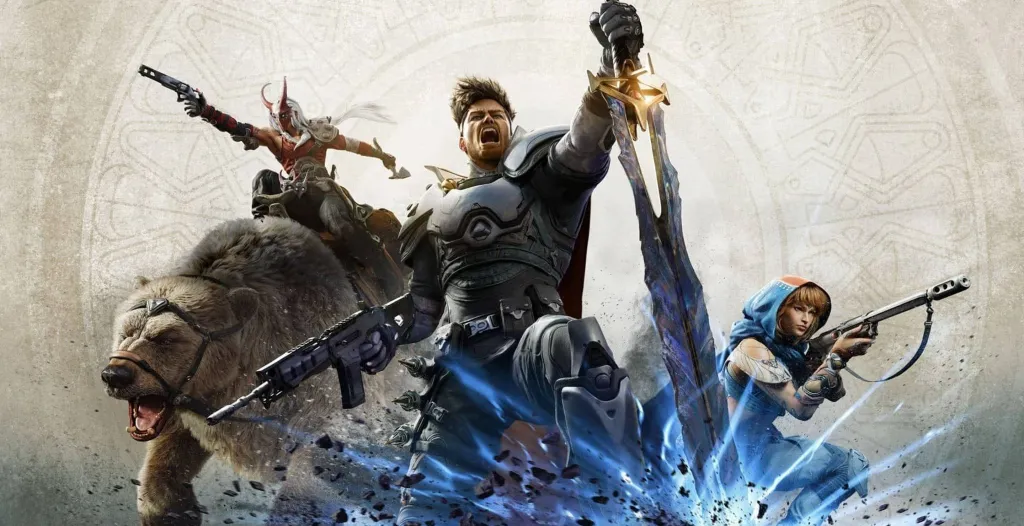
Highguard launched on January 26, 2026. It shuts down on March 12, 2026. That’s 45 days. For context, most live-service games at least survive long enough to release a Season 2. Highguard didn’t get a Season 1.
⚡ Quick Summary (TL;DR)
- Highguard launched January 26, 2026 and shuts down permanently March 12, 2026
- Peak Steam players: ~97,000. Recent Steam players: ~300
- Over 2 million total players tried the game, but almost none stayed
- Tencent secretly funded development and pulled the plug after launch underperformed
- Mass layoffs hit Wildlight Entertainment just two weeks after release
- Fewer than 20 employees remain at the studio
It’s one of gaming’s most spectacular flameouts in recent memory. And unlike some disasters that are hard to explain, the Highguard story actually makes a lot of sense once you lay out all the pieces. Hubris, bad timing, a toxic internet, secret funding, and a genre that chews up studios and spits them out — it’s all here.
Let’s break down exactly why Highguard is shutting down, and what every gamer (and game developer) should take away from this mess.
What Is Highguard, Exactly?
Highguard is a free-to-play, 3v3 multiplayer “raid shooter” developed by Wildlight Entertainment. The studio launched the game simultaneously on PC, PlayStation, and Xbox. At its core, the game features large maps focused on looting, resource gathering, and competitive skirmishes — a sort of hybrid between a hero shooter and a MOBA with some survival DNA baked in.
Wildlight Entertainment formed at the end of 2021, built largely from former Respawn Entertainment developers who had worked on iconic games like Titanfall and Apex Legends. These weren’t unknowns. These were the people who helped create some of the most beloved shooters of the past decade.
The studio spent four years developing Highguard. Four years. And the whole thing lasted 45 days after release. You genuinely could not write a more painful story if you tried.
The Game Awards Reveal That Backfired Badly
The beginning of the end, ironically, was also supposed to be the biggest moment of celebration. In December 2025, Highguard was chosen as the closing reveal at The Game Awards 2025 — the most coveted slot in the entire show. Host Geoff Keighley had personally played the game and gave Wildlight that spotlight moment.
It didn’t go well.
The trailer landed with a thud. Viewers were unimpressed by the art style, confused by the gameplay concept, and — already exhausted from years of live-service fatigue — immediately hostile. Social media turned on the game within minutes. As one developer who later left the studio described it, creators were churning out “ragebait content” about Highguard within hours of the reveal.
“Within minutes, it was decided: this game was dead on arrival, and creators now had free ragebait content for a month.” — Josh Sobel, former Wildlight Entertainment developer (via Gaming Amigos)
Here’s the twist: Wildlight never actually wanted to reveal the game at The Game Awards at all. According to reporting from Kotaku, the studio’s original plan was a quiet shadow drop in January — much like how Apex Legends launched in 2019 with zero advance marketing and became a global phenomenon overnight. The team simply couldn’t say no to a free slot at the biggest gaming showcase on the planet.
That one decision gave the internet over a month to stew, criticize, and write the game’s obituary before a single person had played it. The difference between Highguard and Apex Legends wasn’t just talent or execution — it was timing and the nature of modern gaming culture.
The Numbers Tell a Brutal Story
Peak concurrent Steam players at launch
Concurrent Steam players by early March 2026
Total players who tried the game across all platforms
Total lifespan from launch to shutdown
Nearly 100,000 people showed up on day one. That’s actually a decent launch for an unknown IP in a crowded genre. But those players left fast, and they didn’t come back. Steam user reviews quickly hit “Mostly Negative” territory — many left before even finishing the tutorial, according to community reports.
For a free-to-play game that runs on microtransaction revenue — cosmetics, battle passes, character skins — the formula only works if people stick around long enough to spend money. When your daily active players drop to a few hundred, there’s no revenue stream left to keep the lights on.
The Secret Tencent Funding — and Why It Matters

Highguard joins a growing list of live-service games that failed to sustain a player base after launch. (Image illustration)
This is where the story gets genuinely strange. For all of Wildlight’s talk about being an independent studio, reporting from Game File and Game Developer revealed that Chinese conglomerate Tencent, through its TiMi Studio Group, was the primary financial backer behind Highguard’s four-year development.
Neither Wildlight nor Tencent ever confirmed this publicly. In fact, when Bloomberg pressed Wildlight CEO Dusty Welch about funding sources, he simply declined to comment. The studio’s LinkedIn page described itself as a “fully-funded entertainment studio” — technically true, just not very forthcoming about who the check was from.
The disclosure (or lack thereof) caused its own backlash. When the connection came to light, some players noticed that Tencent also holds a seat on The Game Awards advisory board — the same show that gave Highguard its closing premiere slot. This detail fueled suspicions, though no one has proven any direct connection between the seat and the slot.
What matters more practically: according to reporting from Dexerto and Bloomberg, Tencent pulled its funding on February 11, 2026 — roughly two weeks after launch — after the game failed to hit certain performance metrics. That triggered an immediate wave of layoffs across Wildlight’s roughly 100-person staff.
The Layoffs That Sealed the Game’s Fate
On February 11, 2026, Wildlight Entertainment announced it was laying off “a number of team members” while retaining a “core group of developers.” A subsequent Bloomberg report suggested that fewer than 20 employees remained at the studio. Starting from around 100 people, that’s an 80% reduction in staff within a fortnight of shipping.
To their credit, those remaining developers kept working. They pushed patches, added a 5v5 mode in response to complaints about the original 3v3 format, and stayed communicative with the community. But the writing was on the wall. When player numbers on Steam were hovering around 300 concurrent users and Tencent had already walked out the door, there was no financially viable path forward.
“Despite the passion and hard work of our team, we have not been able to build a sustainable player base to support the game long term.” — Wildlight Entertainment official statement, March 3, 2026
The Hubris Problem: Why Wildlight Didn’t Change Course
A detailed Bloomberg report, citing multiple former Wildlight employees, put one word at the center of the game’s failure: hubris.
The studio spent two of its four development years on a survival-shooter concept before pivoting to the current “raid shooter” format. The pivot left the game feeling underbaked — large maps designed for a different experience, now populated by a small 3v3 format that made those spaces feel empty.
Leadership resisted public playtesting, reportedly committed to the idea that they could pull off another Apex Legends-style shadow drop. The Apex playbook worked in 2019 in a very different gaming landscape. In 2026, with hundreds of live-service shooters competing for attention and gaming Twitter ready to condemn anything at a moment’s notice, that strategy was always a gamble.
According to the Bloomberg report, some developers inside the studio were blindsided by the speed of the layoffs. Staff had believed they had months of runway to ship updates and respond to player feedback. Instead, the rug was pulled almost immediately when launch numbers disappointed.

Apex Legends launched in 2019 via shadow drop and became a massive hit. Wildlight’s founders tried to recreate that magic — but the landscape had changed dramatically.
Highguard vs. Concord: A Comparison Nobody Wanted
From the moment the backlash began, commentators drew comparisons to Concord — Sony’s notoriously short-lived hero shooter that launched in August 2024 and was taken offline after just 14 days.
Highguard lasted 45 days, or 31 days longer than Concord. That’s a sentence that’s technically a compliment and genuinely devastating at the same time. In gaming’s emerging “live-service graveyard,” Highguard now has its own headstone — though it can at least claim it outlasted PlayStation’s biggest recent disaster.
The comparison points to a broader industry crisis. Both games came from experienced developers, launched to initial interest, and then collapsed under a combination of player retention failures, live-service fatigue, and the unforgiving economics of free-to-play. The model demands not just that players show up — it demands that they keep showing up, and keep spending. Highguard never cracked that problem.
The Final Update: A Touching but Bittersweet Send-Off
Before the servers go dark on March 12, Wildlight released one final game update. The patch adds a new Warden character, a new weapon, account level progression, and skill trees. The remaining developers — a skeleton crew by any measure — spent their last days shipping the content they’d promised players.
Some players online found this poignant. Others found it puzzling, questioning why a final update was being pushed for a game with days left to live. But it speaks to the character of the people who stayed: they kept building, even when the mission was over.
Wildlight also confirmed that over 2 million players tried Highguard across platforms since launch. That’s not a small number — it suggests the game had genuine reach and that people were curious. They just weren’t compelled enough to stay.
What Happens to Players Who Spent Money?
This is a fair and frustrating question. Highguard was free to play, but it featured microtransactions for cosmetics and potentially a battle pass. As of writing, Wildlight has not clarified whether any refunds will be offered to players who purchased in-game content. Given the studio’s financial situation, this remains uncertain.
This is unfortunately common in live-service shutdowns. Players who invest real money into games that close down often have little recourse. It’s a systemic issue with the free-to-play model that the Highguard situation highlights once again.
So, Why Did Highguard Really Shut Down?
There’s rarely one reason for a failure this complete. In Highguard’s case, it was a cascade of overlapping problems that no single patch could fix.
The internet had already written the game’s obituary before it launched, thanks to the ill-timed Game Awards reveal. The gameplay itself — while reviewed at a 7.5/10 by Game Informer — had real structural issues that needed time to fix. The free-to-play revenue model collapsed the moment player numbers dropped. Tencent’s funding, tied to launch performance metrics, evaporated almost immediately. Mass layoffs then removed the very people who might have steered the game toward recovery. And leadership, by multiple accounts, was too confident in a playbook that worked in 2019 but doesn’t necessarily work in 2026.
It’s genuinely sad. Not just because of the game, but because of the people. Over 80 talented developers lost their jobs within weeks of shipping something they’d spent four years building. And some of those developers are still there, shipping one last update for a game that shuts down in days.
The Takeaway
Highguard is shutting down on March 12, 2026. The cause of death is officially listed as an inability to build a sustainable player base — but the real story involves secret funding, misplaced strategic confidence, internet toxicity, and the brutal economics of modern live-service gaming. If you want to get one last match in, you have until March 12. After that, it’s gone.
And if you want to take one lesson from all of this: even the people who made Apex Legends couldn’t make lightning strike twice. In live-service gaming, the past doesn’t protect you. Only the players do.
Sources & Further Reading
- Game Informer — Highguard Is Shutting Down For Good Next Week
- Engadget — Highguard Has Raided Its Last Fortress, Will Shut Down March 12
- Kotaku — Highguard Is Already Shutting Down After Only Lasting 31 Days Longer Than Concord
- GameSpot — Highguard Is Shutting Down Soon
- Game Developer — Tencent Was Highguard’s Undisclosed Financial Backer
- Dexerto — Highguard Shutting Down One Month After Launch
- TechRadar — Highguard Will Shut Down Just 45 Days After Launch
- Game File — Sources: Tencent Secretly Funded Highguard
- WCCFTech — Highguard Shutting Down Permanently Next Week