
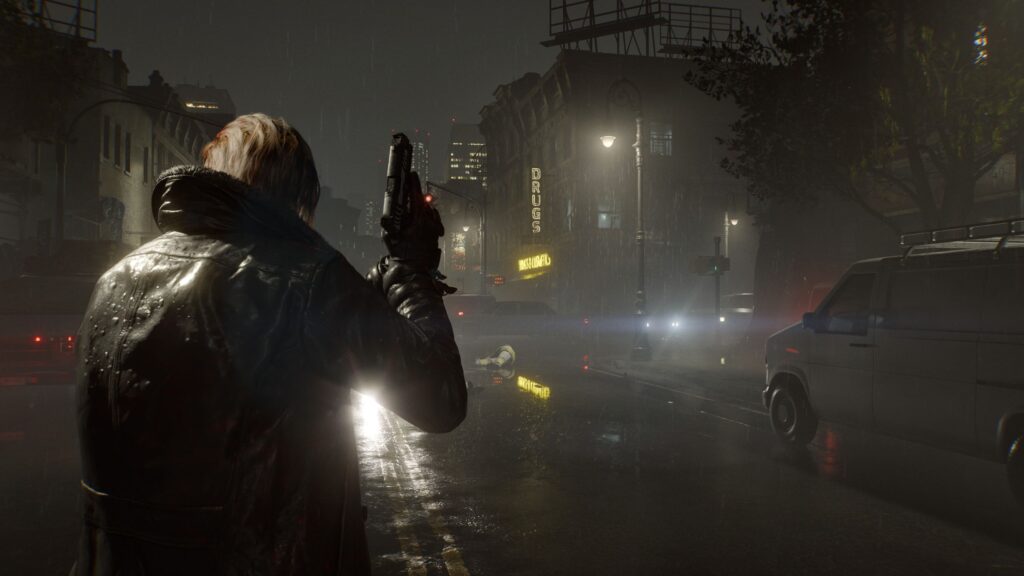
When I first booted up Resident Evil Requiem, I expected another solid entry in Capcom’s long-running survival horror franchise. But after spending over 20 hours navigating its blood-soaked corridors, completing multiple playthroughs, and experiencing every nerve-wracking moment, I realized this isn’t just another Resident Evil game—it’s the culmination of 30 years of survival horror excellence wrapped in a package that somehow feels both familiar and revolutionary.
If you’re wondering whether Resident Evil Requiem lives up to the franchise’s legendary reputation, let me put it this way: this is the game that finally bridges the gap between the claustrophobic terror of classic Resident Evil and the action-packed spectacle of modern entries. But does it succeed? Let’s dig into what makes this ninth mainline entry both a triumph and, occasionally, a victim of its own ambition.
Watch the official review:
What Is Resident Evil Requiem?
Resident Evil Requiem is the ninth mainline installment in Capcom’s iconic survival horror series, released on February 27, 2026, for PlayStation 5, Xbox Series X/S, PC, and Nintendo Switch 2. The game marks the franchise’s 30th anniversary and attempts something ambitious: telling a dual-narrative story that interweaves a veteran protagonist with a fresh perspective.
You play as both Leon S. Kennedy—the fan-favorite agent we’ve followed since Resident Evil 2—and Grace Ashcroft, an FBI agent thrust into a nightmare she never imagined. Their stories intersect at the Rhodes Hill Chronic Care Center, where a dormant infection threatens to resurface, and decades-old conspiracies come to light.
What sets Requiem apart from previous entries? The game doesn’t just switch between characters—it fundamentally changes how you play based on who’s in control.
The Dual Protagonist System: Grace vs. Leon
Watch the gameplay comparison:
Grace Ashcroft: Pure Survival Horror
Playing as Grace is an exercise in constant tension. This isn’t someone who’s fought bioterrorists for decades. She’s terrified, vulnerable, and every zombie encounter feels genuinely life-threatening.
Her segments are presented in first-person perspective, which immediately heightens the sense of immersion and dread. Your inventory is severely limited, forcing you to make agonizing decisions about what to carry. Should you hold onto that healing herb, or make room for crafting materials?
The game brilliantly maintains Grace’s vulnerability throughout the entire campaign. Unlike traditional Resident Evil power curves where you eventually become an unstoppable zombie-killing machine, Grace remains grounded. Even in the late-game, she’s using essentially the same tools—just against increasingly horrifying threats.
I’ll be honest: there were moments playing as Grace where I had to pause the game and take a breath. The hide-and-seek segments against relentless stalkers are genuinely exhausting in the best way possible. When you’re crouched in a locker, listening to heavy footsteps pass inches from your hiding spot, you’ll understand why survival horror works so effectively in Requiem.
Leon Kennedy: Action Horror Perfection
Then you switch to Leon, and Resident Evil Requiem transforms into something completely different.
Leon’s third-person segments are a masterclass in action horror. He’s equipped with combat armor, a full arsenal of weapons, and decades of experience fighting bioterrorism. Where Grace must carefully avoid confrontation, Leon actively seeks it out—and looks damn cool doing it.
The contrast is immediately cathartic. After hours of sneaking around as Grace, becoming Leon feels like finally being able to fight back. His axe and pistol combo creates a rhythmic dance of violence where you’re targeting kneecaps to stagger zombies, then finishing them with brutal axe throws.
But here’s what makes Leon’s segments work: they’re not just mindless action. The game layers in meaningful introspection about his decades-long career, the infection he’s carried since Raccoon City, and the weight of all the carnage he’s witnessed. His one-liners and camp factor are balanced by genuine emotional moments that ground the action.
Watch Leon’s action-packed gameplay:
The Problem with Balance
Here’s where Requiem stumbles: the game’s marketing and opening hours suggest Grace is the primary protagonist. In reality, Leon’s playtime significantly outweighs hers, especially in the latter half of the game.
This lopsided split undermines some of the narrative promises Capcom made about passing the torch to a new generation. Grace, who starts with such compelling potential, takes a backseat just when her character arc should be building toward something meaningful. It’s a missed opportunity that left me feeling slightly hollow by the credits.
Gameplay: Familiar Excellence with New Twists
The Interconnected Narrative Structure
One of Requiem’s most innovative features is how Grace and Leon’s actions affect each other’s playthrough. The game isn’t presenting two separate stories—they’re interlinked in real-time.
For example, enemies you eliminate as Grace might be absent when Leon passes through the same area. Supply caches you unlock with Leon’s axe become accessible to Grace later. Walking through a hallway and seeing the carnage left by your previous character creates a unique sense of continuity rarely seen in dual-protagonist games.
This interconnected design encourages thorough exploration and strategic thinking. Do you use Grace’s limited ammo to clear a room, knowing it’ll make Leon’s passage easier? Or do you conserve resources and hope Leon can brute force through?
The Revolutionary Zombie AI
Capcom introduced a deceptively simple but game-changing twist to the classic T-Virus: infected victims now retain their memories and former occupations.
This isn’t just narrative flavor—it fundamentally changes enemy behavior. You’ll encounter:
- Soldier zombies still carrying military-grade weapons and attempting tactical formations
- Medical staff zombies wielding scalpels with surgical precision
- Maintenance workers obsessed with their former duties (some will even turn off lights you’ve switched on rather than attack you)
- Police officer zombies still following patrol routes from their living days
This viral evolution breathes fresh life into encounters with enemies we’ve fought countless times across 30 years. There’s something deeply unsettling about watching a zombie doctor methodically approach with a bone saw, their movements suggesting muscle memory from thousands of procedures.
It also introduces moral complexity. These aren’t mindless monsters—they’re people whose consciousness is trapped in a nightmare. Every bullet feels like an act of mercy.
Puzzle Design and Exploration
If you’re familiar with Resident Evil’s signature puzzle mechanics, you know what to expect: gem puzzles, combination locks requiring you to decipher environmental clues, and item-based progression that gates off areas until you find the right key or tool.
Requiem doesn’t reinvent this wheel, and honestly? It doesn’t need to. The puzzles strike a perfect balance between making you feel clever without being obtuse. I only needed to consult a guide once during my first playthrough—a testament to the clear environmental storytelling.
The Rhodes Hill Chronic Care Center and the sections in Raccoon City itself are labyrinthian masterpieces. Every hallway, every room feels purposeful. The level design encourages backtracking without making it tedious, and discovering shortcuts creates those satisfying “a-ha!” moments that make exploration rewarding.
Story and Characters: Nostalgia vs. Innovation
The Narrative Promise
Resident Evil Requiem positions itself as a pivotal moment in the franchise—a convergence of old and new, a reckoning with 30 years of lore, and a launchpad for the series’ future.
The story tugs at numerous threads from previous games: Leon’s infection from Raccoon City, the remnants of Umbrella Corporation, returning villains long thought dead, and the nuclear fallout that supposedly ended the Raccoon City incident decades ago.
For longtime fans, it’s a treasure trove of references and callbacks. I found myself pointing at the screen multiple times, recognizing locations, characters, and plot threads from games spanning the entire franchise.
Where It Falls Short
But here’s the thing: Requiem gestures at profound reflection without fully committing to it.
The game asks big questions about legacy, the cost of fighting endless bioterrorism, and what comes next for these characters. Then, by the final act, it seems to shrug and settle for being “just another Resident Evil game”—albeit an exceptionally polished one.
The introspective moments with Leon contemplating his twilight years as a bioterrorist fighter? They don’t really pay off. Grace’s journey of self-actualization and potential as the franchise’s future? It gets sidelined in favor of more Leon screentime.
By the time the credits rolled, I couldn’t shake the feeling that Capcom played it safe when they had every opportunity to take meaningful risks. For a franchise in “damn fine standing,” as it’s been described, this retreat to familiar territory feels like a wasted opportunity.
The Characters Themselves
Grace Ashcroft is genuinely compelling when the game allows her to shine. She’s smart, capable, and her evolution from frightened civilian to survivor is well-executed in her segments. The problem is simply that there aren’t enough of them.
Leon Kennedy remains charismatic as ever. His one-liners land, his combat animations are chef’s kiss, and the voice acting captures both his cocky exterior and the weariness beneath. If this is Leon’s swan song, it’s a worthy sendoff—even if the game doesn’t fully explore the implications of his potential departure.
Supporting characters range from intriguing to functional. Without spoiling anything, expect familiar faces that will delight series veterans, even if their appearances sometimes feel more like fan service than narrative necessity.
Technical Performance and Presentation

Graphics and Art Direction
Resident Evil Requiem is gorgeous. Capcom’s RE Engine continues to impress, delivering photorealistic character models, gruesome enemy designs, and environments dripping with atmosphere.
The lighting deserves special mention. Whether it’s the sterile fluorescent glare of the care center or the eerie moonlight filtering through Raccoon City’s ruins, every location feels meticulously crafted to maximize dread.
Path tracing with NVIDIA DLSS 4.5 elevates the visuals to another level entirely. The way light reflects off pools of blood, creating bloody footprints that track your movement, adds a layer of immersion that traditional rendering can’t match. If you have the hardware to support it, path tracing is absolutely worth enabling—it transforms an already beautiful game into something truly special.
Performance
On PlayStation 5 (where I played the majority of my time), Requiem runs at a solid 60 FPS in performance mode with only occasional minor hitches during particularly hectic sequences. The fidelity mode drops to 30 FPS but showcases even more visual detail.
PC performance varies depending on your settings, but with a decent rig (RTX 4070 or equivalent), you can achieve 1440p at high settings without issues. The path tracing option is demanding but worth it for those with top-tier hardware.
Loading times are impressively snappy across all platforms, with deaths rarely feeling punishing from a technical standpoint.
Audio Design
The sound design in Requiem is masterful. Every creak, every distant moan, every scrape of metal on tile contributes to the oppressive atmosphere.
Playing with a good headset is mandatory for the full experience. The 3D audio positioning helps you track enemies around corners and creates genuine jump scares when something sneaks up behind you.
The soundtrack balances bombastic action themes during Leon’s set pieces with minimalist, tension-building ambience during Grace’s stealth segments. It knows when to stay quiet and let environmental sounds do the work.
Replayability and Content
Capcom clearly expects you to play Resident Evil Requiem multiple times, and they’ve incentivized it well:
- Unlockable weapons and items that dramatically change subsequent playthroughs
- Multiple difficulty levels including a brutal hardcore mode that removes auto-saves
- Speedrun-focused game modes with leaderboards tracking completion times
- New Game Plus that carries over your arsenal while ramping up enemy difficulty
- “Letters from 1998” collectibles that expand lore for dedicated fans
My first playthrough took roughly 12 hours. Subsequent runs, with knowledge of puzzle solutions and optimal routes, can be completed in 4-6 hours. The game actively encourages route optimization and experimentation with different play styles.
For completionists, there’s easily 40+ hours of content extracting every secret, unlocking every achievement, and mastering every difficulty setting.
Watch speedrun strategies:
The Verdict: Excellence with Reservations
So, is Resident Evil Requiem worth your time and money?
Absolutely—with caveats.
This is an exceptionally polished, mechanically refined survival horror game that delivers both genuine scares and satisfying action. The dual-protagonist system creates fascinating gameplay variety, the enemy AI innovations breathe new life into zombie encounters, and the production values are top-tier.
If you want peak Resident Evil—a greatest hits compilation of everything the series has perfected over 30 years—Requiem delivers in spades.
But if you were hoping for the bold, transformative entry that genuinely pushes the franchise forward and takes meaningful risks with its legacy? You’ll finish Requiem feeling like Capcom held back when they should have gone all-in.
The lopsided protagonist balance, the narrative threads that don’t fully resolve, and the sense that the game is playing it safe during an anniversary when innovation should be celebrated—these elements prevent Requiem from ascending to true masterpiece status.
Who Should Play Resident Evil Requiem?
Play this if you:
- Love survival horror with mechanically distinct gameplay styles
- Want the most polished refinement of Resident Evil’s core formula
- Enjoy dual-narrative structures with interconnected consequences
- Are a series veteran hungry for callbacks and lore connections
- Appreciate the balance between horror atmosphere and action spectacle
Think twice if you:
- Expect groundbreaking innovation rather than refined iteration
- Dislike extended hide-and-seek stealth sequences
- Prefer single-protagonist narratives with focused character development
- Haven’t played previous Resident Evil games (while not required, you’ll miss significant context)
Final Score: 8.5/10
Strengths:
- Exceptional mechanical refinement of survival horror and action horror gameplay
- Masterful dual-protagonist system with interconnected consequences
- Innovative zombie AI that retains memories and occupational behaviors
- Outstanding production values, graphics, and sound design
- High replayability with extensive unlockables and difficulty options
Weaknesses:
- Lopsided protagonist balance undermines narrative promises
- Plays it safe narratively when it had opportunity for bold innovation
- Some story threads feel unresolved or underexplored
- Heavy reliance on nostalgia over meaningful forward momentum
Resident Evil Requiem is survival horror excellence—just not quite the revolutionary evolution Capcom’s 30th anniversary deserved.
Frequently Asked Questions
Do I need to play previous Resident Evil games to understand Requiem?
Not technically, but you’ll get significantly more out of the story if you’re familiar with at least Resident Evil 2, Resident Evil 4, and the recent remakes. The game references events and characters from across the franchise’s 30-year history.
How long does it take to beat Resident Evil Requiem?
First playthroughs average 10-14 hours depending on difficulty and exploration thoroughness. Speedrunners can complete it in under 5 hours with optimized routes.
Is there DLC planned for Resident Evil Requiem?
According to recent reports, DLC is “well into development,” though Capcom hasn’t officially announced specifics yet. Given the series’ track record with substantial post-launch content, expect additional campaigns or challenge modes.
Can I play Resident Evil Requiem on last-gen consoles?
No, Requiem is exclusive to current-gen platforms: PS5, Xbox Series X/S, PC, and Nintendo Switch 2.
Which difficulty should I start on?
Standard difficulty provides a balanced challenge for most players. If you’re a series veteran, consider Hardcore mode for a more tense experience with limited saves and tougher enemies.
Additional Resources:
- Official Resident Evil Requiem Website
- Buy on Steam
- PlayStation Store Listing
- Resident Evil Wiki – Complete Lore Guide
More Video Reviews:
- ACG’s Buy, Wait, Never Touch Review
- GameSpot’s Two-Headed Mutant Review
- Happy Console Gamer’s Spoiler-Free Review
Resident Evil Requiem is available now on PlayStation 5, Xbox Series X/S, PC, and Nintendo Switch 2 for $69.99 (Standard Edition) or $79.99 (Deluxe Edition).