
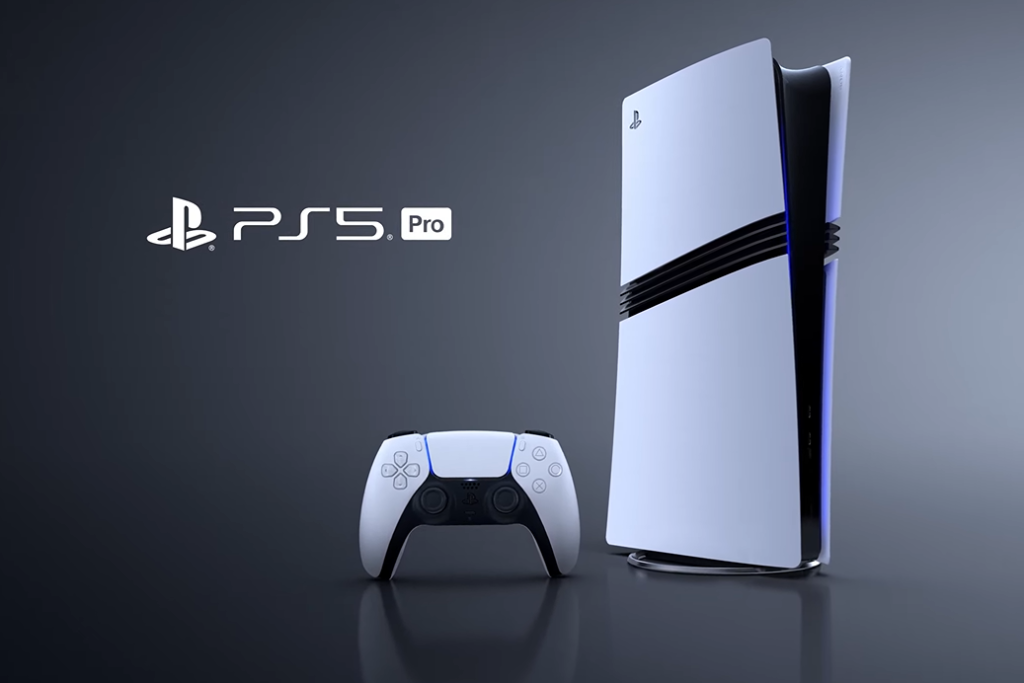
When Sony dropped the PS5 Pro back in November 2024 at a jaw-dropping $699.99 price tag, the gaming community collectively gasped. I’ll be honest—my first thought was, “Are they serious?” But after spending over a year with this beast of a console, testing everything from graphically demanding AAA titles to indie darlings, I’ve got some thoughts you need to hear before making that investment.

What Exactly Is the PS5 Pro?
Let’s cut through the marketing speak. The PS5 Pro isn’t a next-gen console—it’s Sony’s mid-generation refresh that promises to bridge the gap between “fidelity mode” and “performance mode” that’s been plaguing PS5 owners since launch. You know that frustrating choice between smooth 60fps gameplay or gorgeous 4K graphics? Sony claims the Pro eliminates that dilemma entirely.
But does it actually deliver? Spoiler alert: mostly yes, with some notable caveats.
Unboxing and First Impressions
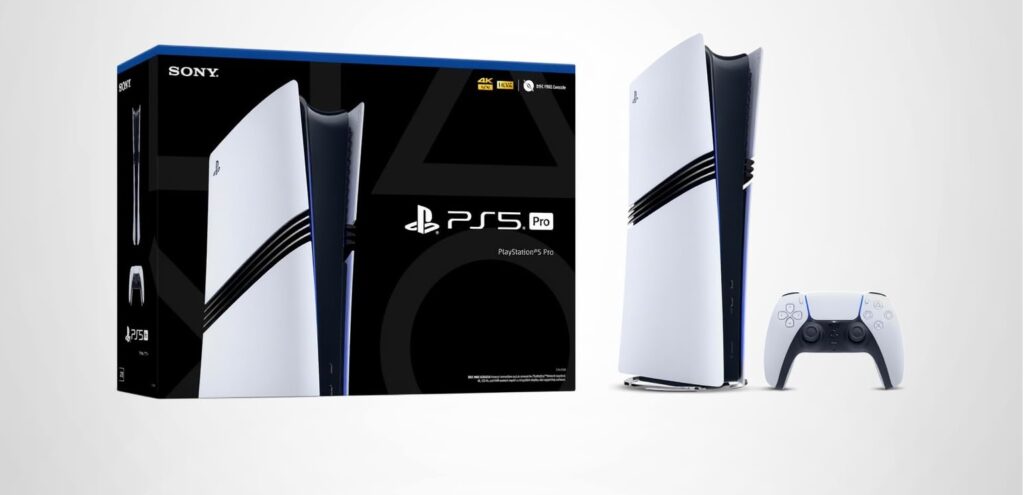
Opening the box, you’re greeted with the familiar PlayStation aesthetic—but there’s a twist. The PS5 Pro is slightly taller than the PS5 Slim, and honestly? It’s still a chunky piece of kit. Sony includes:
- PS5 Pro console (disc-less)
- DualSense wireless controller
- 2TB SSD (double the base PS5)
- HDMI cable
- Power cable
- Astro’s Playroom (pre-installed)
Here’s the first gotcha: no disc drive. You’ll need to shell out an additional $79.99 for the Ultra HD Blu-ray disc drive if you’re still collecting physical games. That brings the real cost to nearly $780 before tax—ouch.
Technical Specifications: What’s Under the Hood?
This is where things get interesting. Sony didn’t just slap a slightly faster processor in the Pro—they went all-in on GPU enhancements:
GPU Powerhouse
- 67% more Compute Units than the standard PS5
- 28% faster memory
- Up to 45% faster rendering for gameplay
- 33.5 teraflops of raw graphical power
Advanced Ray Tracing
The Pro features ray tracing hardware that’s 2-3x faster than the base PS5. In practical terms? Reflections in puddles, glass surfaces, and metallic objects look startlingly realistic. Playing Marvel’s Spider-Man 2 with ray-traced reflections swinging through Manhattan is legitimately breathtaking.
PlayStation Spectral Super Resolution (PSSR)
Here’s Sony’s secret weapon—AI-driven upscaling that rivals NVIDIA’s DLSS. PSSR takes lower-resolution images and uses machine learning to reconstruct them at 4K with incredible detail. It’s not perfect (we’ll get to that), but when it works, it’s borderline magical.
Storage and Connectivity
- 2TB SSD (up from 825GB on the base PS5)
- Wi-Fi 7 compatible for blazing-fast downloads
- Same ports as PS5: 2x USB-C front, 2x USB-A rear, HDMI 2.1
Performance Testing: The Numbers Don’t Lie
I tested the PS5 Pro across 15 enhanced titles, and the results were… mixed but mostly impressive. Here’s what you actually need to know:
Frame Rate Consistency
On the standard PS5, Final Fantasy VII Rebirth in performance mode hovered between 45-60fps in busy areas. On the Pro? A rock-solid 60fps with visuals that match—and sometimes exceed—the base console’s fidelity mode. That’s the difference we’re talking about.
Resolution Improvements
Most Pro-enhanced games target 4K output using PSSR upscaling from an internal resolution between 1440p and 1800p. The results are sharper than the base PS5’s performance mode (typically 1080p-1440p) but not always as crisp as native 4K fidelity mode.
Game-Specific Enhancements
The Winners:
- Horizon Forbidden West: Stunning. 60fps with ray-traced reflections makes the world pop.
- Gran Turismo 7: Ray-traced reflections on car bodies during gameplay? Chef’s kiss.
- Ratchet & Clank: Rift Apart: The dimension-hopping is even smoother with zero loading stutters.
- The Last of Us Part II Remastered: The detail in facial animations at 60fps is incredible.
Watch this detailed comparison: PS5 vs PS5 Pro Gameplay
The Disappointing:
- Alan Wake 2: Still struggles to maintain 60fps in certain areas.
- Jedi: Survivor: Pro patch helped, but performance issues persist.
- Some non-enhanced PS4 games show minimal improvement despite “Game Boost.”
PlayStation Spectral Super Resolution: The AI Upscaling Deep Dive
PSSR is genuinely impressive technology, but it’s not without quirks. In my testing:
Strengths:
- Significantly cleaner image than standard upscaling methods
- Handles fine details (hair, foliage) remarkably well
- Low performance overhead
Weaknesses:
- Occasional shimmering on thin objects (power lines, fences)
- Some games show artifacts in motion
- Not all developers have optimized for it equally
Think of PSSR as a talented but inexperienced artist—incredible potential, but still learning the craft. By late 2025, Sony released PSSR 2.0, which addressed many early issues, but it required developers to re-patch their games.
Check out this PSSR technical analysis
PS5 Pro Enhanced Games: What’s Actually Worth Playing?
Sony claims over 100 games are “PS5 Pro Enhanced,” but the quality of those enhancements varies wildly. Here’s my curated list of must-play Pro titles:
Top Tier Enhancements
- Marvel’s Spider-Man 2 – The definitive way to play
- Demon’s Souls – Ray tracing at 60fps is stunning
- Gran Turismo 7 – Racing perfection
- Horizon Forbidden West – Jaw-dropping visuals
- Ratchet & Clank: Rift Apart – Showcases the SSD + GPU combo
Notable Mentions
- Assassin’s Creed Shadows
- Baldur’s Gate 3
- Final Fantasy VII Rebirth
- Hogwarts Legacy
- Dragon’s Dogma 2
For games like Dead in Antares or other indie titles, the benefits are less pronounced—these games weren’t GPU-bottlenecked on the base PS5 anyway.
Watch 15 games that push PS5 Pro to its limits
Design and Build Quality: The Good and the… Chunky

Sony kept the PS5 family aesthetic intact, with three distinctive black stripes running down the white shell. It’s… fine? Not ugly, not beautiful. Just unmistakably PlayStation.
Dimensions:
- Same height as original PS5
- Same width as PS5 Slim
- Slightly heavier due to enhanced cooling
The cooling solution is noticeably improved. Even during extended Elden Ring sessions (yes, it’s Pro-enhanced now), the console runs whisper-quiet. The base PS5 could sound like a jet engine under load—the Pro? More like a gentle desktop fan.
User Experience: Living With the PS5 Pro
The UI Experience
Identical to the standard PS5. If you’ve used any PS5 model, you’ll feel right at home. Game switching is instant, the PS Store is the same, and all your settings transfer over seamlessly if you’re upgrading.
Backward Compatibility
The Pro plays over 8,500 PS4 games, with many benefiting from “Enhanced Image Quality” upscaling. Testing Bloodborne (still no 60fps patch, From Software, seriously?), the image was noticeably sharper, but performance remained locked at 30fps.
Storage Management
That 2TB SSD is a game-changer. I currently have:
- 23 PS5 games installed
- 12 PS4 games
- Still 600GB free
No more delete-and-reinstall dance when a new release drops. This alone adds tangible value.
Temperature and Noise
After hundreds of hours across all seasons (including a brutal summer), the Pro maintains impressive thermals. Loudest I’ve heard it? Maybe 35-40 decibels during Cyberpunk 2077 extended sessions—quieter than a normal conversation.
PS5 Pro vs. PS5: Should You Upgrade?
This is the million-dollar (or $700) question. Here’s my honest take:
Upgrade If:
- ✅ You have a 4K TV (preferably 120Hz with VRR)
- ✅ You play AAA games that are Pro-enhanced
- ✅ The fidelity vs. performance choice bothers you
- ✅ You want the best possible PlayStation experience
- ✅ You need more storage (2TB vs. 825GB is huge)
Stick With Base PS5 If:
- ❌ You’re on 1080p or budget 4K TV (differences minimal)
- ❌ You primarily play indies or non-enhanced games
- ❌ You’re happy with performance mode’s visuals
- ❌ $700+ feels unreasonable for incremental gains
- ❌ You sit far from your TV (differences harder to spot at 10+ feet)
First-Time Buyers
If you don’t own any PS5, the value proposition shifts. A base PS5 Slim with disc drive runs $499—that’s $200 cheaper than the Pro. For most people, that $200 buys a lot of games. Unless you’re obsessive about graphics (hi, that’s me), the Slim makes more financial sense.
Related: Legacy of Kain Defiance Remastered Review – A perfect example of a game that looks stunning even on base PS5.
The Price Controversy: Is $700 Justified?
Let’s address the elephant in the room. At $699.99 (plus tax, plus disc drive if needed), the PS5 Pro costs more than a PS4 Pro at launch, more than Xbox Series X, and approaches entry-level gaming PC territory.
The Math:
- PS5 Pro: $699.99
- Disc Drive (optional): $79.99
- Extra controller: $74.99
- PS Plus Premium (annual): $159.99
- Total ecosystem entry: ~$1,015
For that money, you could build a decent gaming PC with an RTX 4060 Ti and have upgrade flexibility. But you’d miss PlayStation exclusives and that plug-and-play simplicity.
Is it worth it? That depends entirely on your gaming priorities and disposable income. As someone who spends 15-20 hours weekly gaming, the enhanced experience justifies the cost for me. For casual players gaming a few hours monthly? Probably not.
Six-Month Reality Check: Has It Held Up?
After the honeymoon period wore off, here’s what still impresses and what frustrates:
Still Love:
- Image quality – Games genuinely look better
- Storage capacity – No more install juggling
- Consistent performance – 60fps is the norm, not the exception
- Quiet operation – Whisper-quiet even under load
Still Frustrating:
- Limited library of truly transformative enhancements – Maybe 20-30 games show massive improvements
- PSSR inconsistencies – Some games handle it better than others
- Price – Still feels steep for incremental gains
- Marketing oversell – “45% faster rendering” doesn’t always mean 45% better experience
What About 8K Gaming and VRR?
Sony touts 8K support, but let’s be real: this is marketing nonsense. As of March 2026, essentially zero games run at native 8K. The Touryst can output 8K, but it’s a small indie puzzle game. For 99.9% of users, 8K is irrelevant.
VRR (Variable Refresh Rate), however, is genuinely useful. If you have a compatible TV or monitor (HDMI 2.1 with VRR support), games that fluctuate between 50-60fps feel significantly smoother. It won’t make a 40fps game feel like 60fps, but it eliminates screen tearing and judder.
PlayStation VR2 Compatibility
Yes, the PS5 Pro works perfectly with PSVR2. Do games look better? Marginally. Horizon Call of the Mountain is slightly sharper, and Resident Evil Village VR maintains more consistent frame rates. But the improvements are subtle—if you’re buying a Pro specifically for VR, temper expectations.
Related: Fatal Frame II Crimson Butterfly Remake Review – A game that benefits from Pro enhancements in both flat and VR modes.
Future-Proofing: What About PS6?
Here’s the awkward truth: the PS6 is likely 2-3 years away (current rumors suggest 2028-2029 due to AI chip shortages). If you buy a Pro now, you’re getting maybe 2-3 years before the next generation launches.
Is that worth $700? For enthusiasts who always want the best, absolutely. For average gamers, it’s questionable. The base PS5 will remain fully supported throughout the generation—Sony has confirmed no Pro-exclusive games.
Accessories and Ecosystem
The Pro works with all existing PS5 accessories:
- DualSense Edge – Worth it for competitive gamers
- PlayStation Portal – Remote play device (I use mine constantly)
- Pulse 3D headset – Tempest 3D Audio works identically
- PSVR2 – Full compatibility
- Access Controller – Adaptive gaming support
One minor annoyance: the disc drive is a separate purchase and attachment, creating an asymmetrical look when installed. It’s functional, but aesthetically awkward.
The Competition: How Does Xbox Series X Compare?
The Xbox Series X retails for $499 with a disc drive, 1TB storage, and comparable performance to the base PS5. Microsoft hasn’t announced a mid-gen refresh (and probably won’t).
PS5 Pro Advantages:
- Better exclusives (subjective but generally agreed upon)
- PSSR upscaling technology
- 2TB storage out of the box
- Quieter operation
Xbox Series X Advantages:
- $200 cheaper
- Includes disc drive
- Game Pass (incredible value)
- Slightly better backward compatibility
For multi-platform gamers, the Xbox Series X offers better value. For PlayStation ecosystem loyalists, the Pro is the premium option.
Real Talk: Who Should Actually Buy This?
After living with the PS5 Pro for over a year, here’s my unfiltered advice:
Perfect For:
- Enthusiast gamers with 4K TVs who demand the best
- Tech reviewers and content creators (that’s me!)
- PlayStation exclusives fans who want the definitive experience
- Anyone upgrading from PS4 Pro or base PS4
Skip It If:
- You own a base PS5 and are happy – differences are real but not revolutionary
- Budget-conscious gamers – use that $700 for games instead
- Casual players – you won’t notice most improvements
- You game primarily on 1080p – benefits are minimal
Consider It If:
- You’re buying your first PS5 – weigh the extra $200 carefully
- You have a high-end gaming setup – premium TV, sound system, etc.
- You plan to keep it for 3+ years – long-term value improves
Games That Showcase PS5 Pro’s Power
These titles make the strongest case for the Pro’s existence:
- Marvel’s Spider-Man 2 – Ray tracing + 60fps is transformative
- Horizon Forbidden West – Arguably the best-looking console game ever
- Gran Turismo 7 – Racing game perfection
- Demon’s Souls – From Software magic at its finest
- Ratchet & Clank: Rift Apart – Dimension-hopping showcases the SSD
- Final Fantasy VII Rebirth – Massive world that benefits from consistent 60fps
- The Last of Us Part II Remastered – Incredible facial detail and environments
- Resident Evil 4 Remake – Ray-traced lighting is chef’s kiss
- Stellar Blade – Fast combat benefits from high frame rates
- Ghost of Tsushima Director’s Cut – Already gorgeous, Pro makes it stunning
For comprehensive gaming news and puzzle solutions, check out today’s Wordle hints or NYT Connections puzzle.
Common Issues and Troubleshooting
After extensive use and community feedback, here are common problems:
Coil Whine
Some units exhibit high-pitched coil whine under heavy load. Mine has it faintly, but only noticeable in a silent room. Sony claims this is normal and doesn’t indicate hardware failure.
PSSR Artifacts
Certain games show visual artifacts with PSSR enabled. Developers have been patching these issues, but it’s an ongoing process. You can usually revert to standard upscaling in game settings.
Wi-Fi 7 Compatibility
Unless you have a Wi-Fi 7 router (rare and expensive as of 2026), you won’t benefit from this feature. The console works fine with Wi-Fi 6 and 5.
Stand Confusion
The horizontal stand is built-in, but the vertical stand is sold separately ($29.99). It’s a minor cost but annoying oversight.
The Verdict: One Year Later
So here’s the bottom line: The PS5 Pro is the best PlayStation console ever made—but it’s also the most expensive and least essential.
If you’re deeply embedded in the PlayStation ecosystem, have a premium gaming setup, and the price doesn’t make you wince, the Pro delivers a measurably better experience. Games look sharper, run smoother, and feel more immersive. That’s not marketing fluff—it’s genuinely noticeable.
But for most gamers? The base PS5 remains an excellent console that plays all the same games. The Pro’s improvements are real but incremental—a luxury, not a necessity.
Final Score: 8.5/10
Pros:
- ✅ Best console graphics available
- ✅ Consistent 60fps in most enhanced titles
- ✅ 2TB storage is incredibly convenient
- ✅ Whisper-quiet operation
- ✅ PSSR technology shows promise
Cons:
- ❌ Expensive, especially with add-ons
- ❌ No disc drive included
- ❌ Benefits require 4K TV to appreciate fully
- ❌ Limited library of transformative enhancements
- ❌ Doesn’t future-proof against PS6
Watch the comprehensive year-one review
Frequently Asked Questions
Is PS5 Pro worth it over PS5? If you’re a graphics enthusiast with a 4K TV and play Pro-enhanced games regularly, yes. For most gamers, the base PS5 offers 95% of the experience at a significantly lower cost.
Can I use my old PS5 games on PS5 Pro? Absolutely. All PS5 and PS4 games are compatible. Enhanced titles automatically detect the Pro hardware and enable improvements.
Does PS5 Pro run PS4 games better? Yes, through “Enhanced Image Quality” upscaling. Games like Bloodborne, God of War, and The Last of Us look noticeably sharper, though frame rates remain locked at developer-intended caps.
What’s the difference between PS5 and PS5 Pro? The Pro features a more powerful GPU (67% more compute units), AI-driven upscaling (PSSR), advanced ray tracing, 2TB storage, and Wi-Fi 7 support.
Do I need a 4K TV for PS5 Pro? You don’t need one, but you’ll miss most of the benefits. On a 1080p display, differences are minimal. A 4K TV with HDR and 120Hz makes the Pro shine.
Will there be PS5 Pro exclusive games? No. Sony has confirmed all games will run on both PS5 and PS5 Pro, with the Pro simply offering enhanced visuals and performance.
Where to Buy PS5 Pro
As of March 2026, the PS5 Pro is readily available at:
- PlayStation Direct – Best for early access to special editions
- Amazon – Fast shipping with Prime
- Best Buy – In-store pickup available
- Walmart – Competitive pricing
- GameStop – Trade-in programs available
Stock has stabilized significantly compared to the PS5’s launch chaos. You can typically walk into a store and buy one, or order online without waiting lists.
Final Thoughts
The PS5 Pro represents Sony’s vision for premium console gaming in 2024-2026. It’s not revolutionary, but it’s refinement done right. For enthusiasts willing to pay for incremental improvements, it’s worth every penny. For everyone else, the base PS5 remains the smarter buy.
After a year of daily use, I don’t regret the purchase—but I also understand why many gamers are perfectly happy sticking with their base consoles. The “Pro” moniker is accurate: it’s a professional-grade option for people who want the absolute best, not a must-have upgrade for the average player.
Whether you choose the Pro or stick with the standard PS5, what matters most is that you’re playing great games. And in 2026, PlayStation has no shortage of those.
For more gaming reviews and daily puzzle solutions, explore our gaming coverage including Tales of Berseria Remastered and City Hunter Review.
Related Videos: